Friday, April 13, 2012
Lecture 10: syntax, part 2 (13/04/12)
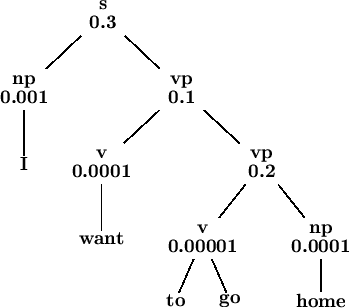
Backtracking vs. dynamic programming for parsing. The CKY algorithm. The Earley algorithm. Probabilistic CFGs (PCFGs). PCFGs for disambiguation: the probabilistic CKY algorithm. PCFGs for language modeling.


Wednesday, April 4, 2012
Lecture 9: syntax, part 1 (03/04/12)
Introduction to syntax. Context-free grammars and languages. Treebanks. Normal forms. Dependency grammars. Syntactic parsing: top-down and bottom-up. Structural ambiguity.


Monday, April 2, 2012
Lecture 8: part-of-speech tagging, part 2 (30/03/12)
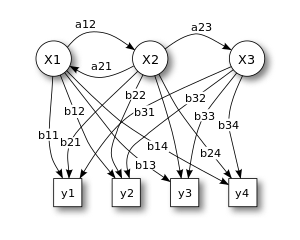
Stochastic part-of-speech tagging. Hidden markov models. Deleted interpolation. Transformation-based POS tagging. Handling out-of-vocabulary words.

Lecture 7: part-of-speech tagging part 1 (27/03/12)
Introduction to part-of-speech (POS) tagging. POS tagsets: the Penn Treebank tagset and the Google Universal Tagset. Rule-based POS tagging. Introduction to stochastic POS tagging.


Tuesday, March 20, 2012
Lecture 6: perplexity, smoothing, interpolation (23/3/12)
After continuing with perplexity, we will introduce smoothing and interpolation techniques to deal with the issue of data sparsity.


Lecture 5: implementing a language model in Perl; perplexity (20/3/12)
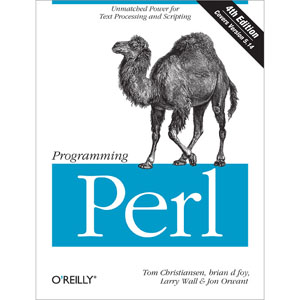
We will see how to implement an n-gram language model in Perl in 20-30 lines of code (!). We will also discuss how to evaluate language models by means of perplexity.

Friday, March 16, 2012
Lecture 4: language models (16/3/12)
Today's lecture is about language models. You will discover how important language models are and how we can approximate real language with them. N-gram models (unigrams, bigrams, trigrams) will be discussed, together with their probability modeling and issues.


Thursday, March 15, 2012
Lecture 3: morphological analysis (13/3/12)
We continued our introduction to regular expressions in Perl. We also introduced finite state transducers for encoding the lexicon and orthographic rules.


Friday, March 9, 2012
Lecture 2: words, morphemes and regular expressions (9/3/12)
Today's lecture was focused on words and morphemes. Before delving into morphology and morphological analysis, we introduced regular expressions as a powerful tool to deal with different forms of a word.
Homework: watch 2001: a space odyssey!

Homework: watch 2001: a space odyssey!

Tuesday, March 6, 2012
Lecture 1: introduction (6/3/12)
We gave an introduction to the course and the field it is focused on, i.e., Natural Language Processing, with a focus on the Turing Test as a tool to understand whether "machines can think". We also discussed the pitfalls of the test, including Searle's Chinese Room argument.


Subscribe to:
Posts (Atom)