We gave an introduction to the course and the field it is focused on, i.e., Natural Language Processing and its challenges.
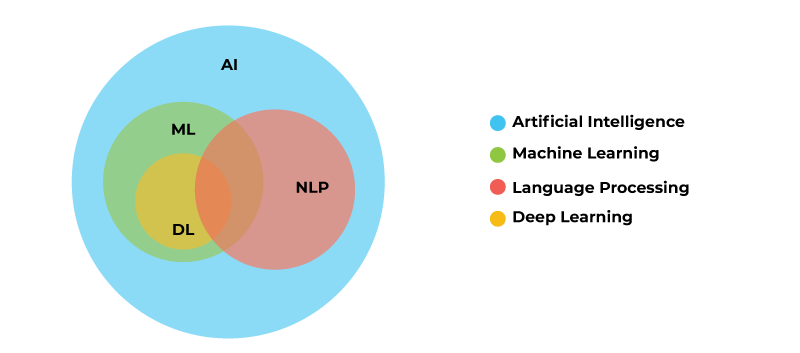
We gave an introduction to the course and the field it is focused on, i.e., Natural Language Processing and its challenges.

Welcome to the Sapienza NLP course blog 2022! Cool things about to happen:
IMPORTANT: The current lecture model (TBC) is blended, meaning that
50% of the students can attend physically, while the others will attend
via online streaming. Please get access to the Facebook group by signing up via the link below). For
students who can attend physically, the 2022 class hour schedule will be
on Monday 14-17 (room A5) and on Thursday 16-18 (room A3), via Ariosto, 25 (DIAG). Other students attending online will still be
considered attending students.
Please sign up to the NLP class!
Introduction to multilingual Semantic Parsing. Abstract Meaning Represenatation. Introduction to machine translation (MT) and history of MT. Overview of statistical MT. Beam search for decoding. Introduction to neural machine translation: the encoder-decoder
neural architecture. The BLEU
evaluation score. Performances and recent improvements. Neural MT: the encoder-decoder architecture; BART; advantages; results. Attention in NMT. Additional uses of the encoder-decoder architecture: Generationary.

Closing of the
course!
More on Word Sense Disambiguation. Homework 3: WSD of Word-in-Context datasets. From word to sentence representations. Semantic roles. Resources: PropBank, VerbNet, FrameNet, VerbAtlas. Semantic Role Labeling (SRL). State-of-the-art neural approaches.

Introduction to Word Sense Disambiguation. Elements necessary for
performing WSD. Supervised vs. unsupervised vs. knowledge-based WSD.
Supervised WSD techniques. Neural WSD: LSTM and Transformer-based approaches.
Integration of knowledge and neural WSD.

Byte Pair Encodings (BPEs). BERT. RoBERTa. XLM-R. Evaluation: GLUE and SuperGLUE benchmarks.
Introduction to Natural Language Understanding (NLU): Word Sense Disambiguation, Semantic Role Labeling, Semantic Parsing. Lexical substitution.

Introduction to the attention in deep learning: motivation, attention scores, approaches. The Transformer architecture. Introduction to BERT.


Introduction to attention (via the Question Answering task). PyTorch notebook.

Introduction to Neural Language Modeling with LSTMs. Issues and advantages. PyTorch Notebook.

